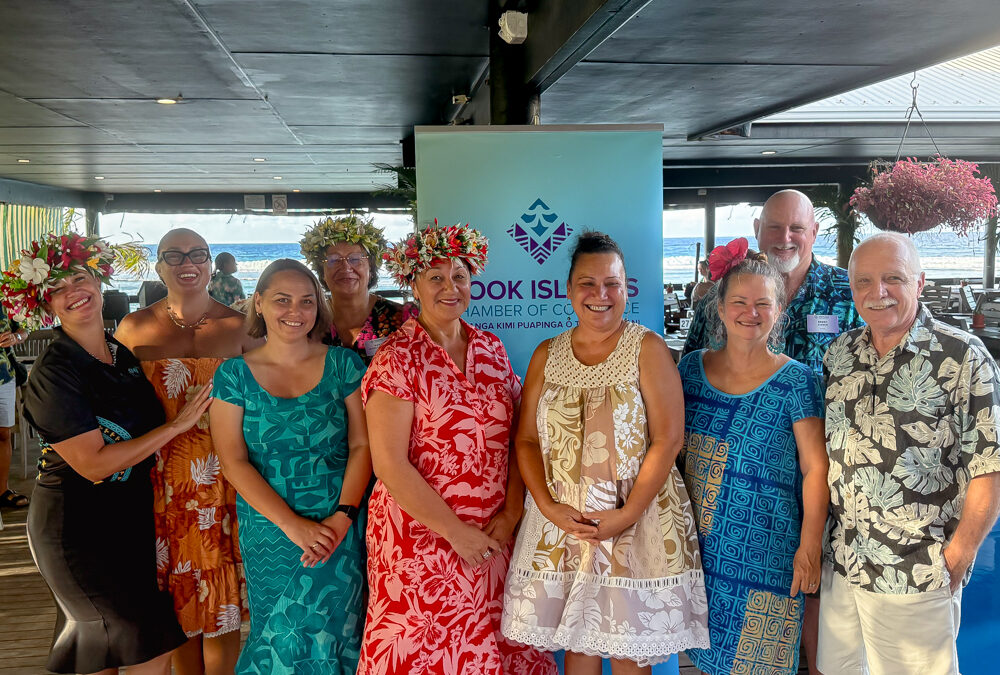
Continuing our series with BLP’s in-country partners, today we profile the Cook Islands Chamber of Commerce, led by Chair Addrienne Hosking-Tinirau.
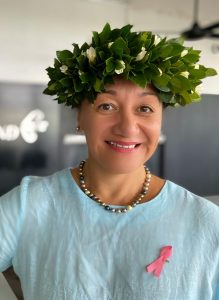 Addrienne says the Chamber represents the private sector and acts as an umbrella organisation, collaborating with business, government and international agencies to promote a business enabling environment in the country. The Cook Islands Chamber has a growing membership of over 115 businesses.
“A key focus for us is maintaining open dialogue and transparency between the private and public sectors. This includes staying actively engaged with ministries such as the Ministry of Foreign Affairs and Immigration and the Ministry of Finance and Economic Management. By doing so, we can support good economic governance and ensure clarity around government decisions that affect the private sector and contribute to rising business costs.”
Enjoying her role, Addrienne has been involved in the Chamber since 2022 and is currently serving her second term. “The role is rewarding because the hard work supports not only businesses but also people within the communities. It can be challenging at times – but also very rewarding.”
“I enjoy being a part of the collective discussions with my Board on the best way forward for our economy and the private sector. They have so much knowledge and expertise from different areas of the private sector.”
Addrienne is supported by eight Board members; each contributes their expertise on a voluntary basis and is responsible for driving initiatives and leading our business sectors including Infrastructure, Tourism, Environment, Banking & Finance, Labour, E-Commerce, Trade & Exports.
Tourism and SME sector
For such a small country (population approximately 12,900), the Cook Islands tourism industry is a key driver for the economy. With the increase in the aviation landscape with Air New Zealand, JetStar, Air Tahiti and Hawaiian Air servicing the Cook Islands tourism has exceeded pre covid numbers. This year we welcome additional routes from New Zealand (Christchurch) and Australia (Brisbane).
In the Cook Islands, the SME sector make up the majority of locally supported businesses in the private sector.
Addrienne says that the biggest challenge for small and medium‑sized businesses in the Cook Islands is the rising cost of operating their business. Ongoing global conflicts and instability in natural resources, i.e. fuel and oil supply are adding new layers of uncertainty, with the impact already being felt through basic cost of living and increased petrol prices. These pressures are placing strain on business sustainability.
Rationing of fuel is not new in the Cook Islands, having experienced supply chain issues, rationing of jet fuel and temporary shortages of general fuel in the past. The small island nation is also heavily reliant on essential items like food, building materials, gas, and diesel for the power plant to maintaining a reliable power supply critical for the island’s operations.
“Fortunately, when COVID hit, we were able to turn in upon ourselves, supplying fresh produce and holiday staycations which the locals were able to be tourists in their own homeland – we coped,” Addrienne confirms.
In 2022, as the Cook Islands emerged from the pandemic and reinstated two‑way quarantine‑free travel with New Zealand, the country recorded 113,551 visitors, marking a strong rebound after two years of border closures, though still below the 2019 pre‑COVID peak of 171,550 visitors. Tourism continued to strengthen, with 170,525 visitors in 2024, bringing arrivals almost fully back to pre‑pandemic levels. By 2025, the Cook Islands achieved a record-breaking 187,018 visitors, officially surpassing all previous high points and delivering a significant boost to the economy.
Addrienne notes that a large proportion of SMEs in the Cook Islands are small, family‑run enterprises that operate informally and focus on day‑to‑day income—such as selling fresh produce or arts and crafts at local markets. Many of these micro‑businesses are not formally registered. A key focus of the Chamber’s work is helping these SMEs transition from informal operations into formal business structures, particularly by supporting them with bookkeeping practices and meeting tax obligations.
“Starting a business in the Cook Islands is relatively easy for anyone, but our role is to make sure they’re set up correctly and positioned for success,” says Addrienne.
The Chamber runs workshops every few months—sometimes in partnership with organisations like ANZ through programs such as Money Minders—to help new and existing businesses strengthen their financial stability and long‑term sustainability. These workshops also integrate climate‑resilience training, covering practical topics such as business continuity planning and effective waste‑management practices.
Addrienne explains that the Chamber also delivers the Young Enterprise Scheme (YES) in partnership with Tereora College, helping students develop entrepreneurial skills and launch their own business ideas. The program is further supported through sponsorship from the Bank of the Cook Islands (BCI), strengthening opportunities for young people interested in starting a business.
BLP partnership
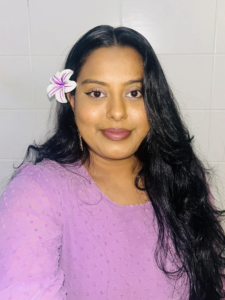 Shweta Vandana is BLP’s new Business Service Manager in the Chamber. Addrienne confirms Shweta plays a critical role in leading and facilitating the BLP programme in the country to support the SME sector.
BLP is a private sector development programme funded by the New Zealand government and delivered by DT-Global. BLP works across 12 Pacific Island nations to stimulate demand for business advisory services and improve access to financial services.
The BLP programme commenced in the Cook Islands in 2020, and 19 advisory businesses are now approved within the BLP Advisory Network provided quality advisory services to local SMEs. Through BLP, these advisors can offer SMEs BLP subsidies to make their services both more affordable and accessible.
The BLP programme facilitated through the Chamber has dispersed 131 BLP grants with an average grant value of $5,700 NZD and a total value of $755,000 NZD.
The Cook Islands Chamber is backing business to foster a vibrant private sector and supporting the nation’s economic development. By advocating for strong governance, facilitating valuable partnerships like BLP, and empowering SMEs and young entrepreneurs, the Chamber ensures that the business community is well-equipped to face challenges and seize opportunities.
To start your journey with BLP, you can self-assess your needs by using the free online tools available to help small- and medium-sized businesses diagnose areas in their businesses that an advisor could improve.
The first step can be the online Business Health Check. You can also check your business’s resilience to respond to crises or climate change challenges on the Business Continuity Planner and the Climate Action Sensor. If you prefer to meet a local BLP representative in person to discuss your business, get in touch with our local partners to arrange a face-to-face Diagnostic.